- New framework to simplify construction norms, promote real estate, infrastructure and employment generation
- Regulations to bring uniformity across industrial development authorities including Noida, YEIDA, GIDA, UPSIDA and UPEIDA
Lucknow: In a major policy initiative aimed at accelerating Uttar Pradesh’s journey towards becoming a one trillion-dollar economy, the Infrastructure and Industrial Development Department has prepared the Unified Model Building Regulations-2026 for industrial development authorities across the state.
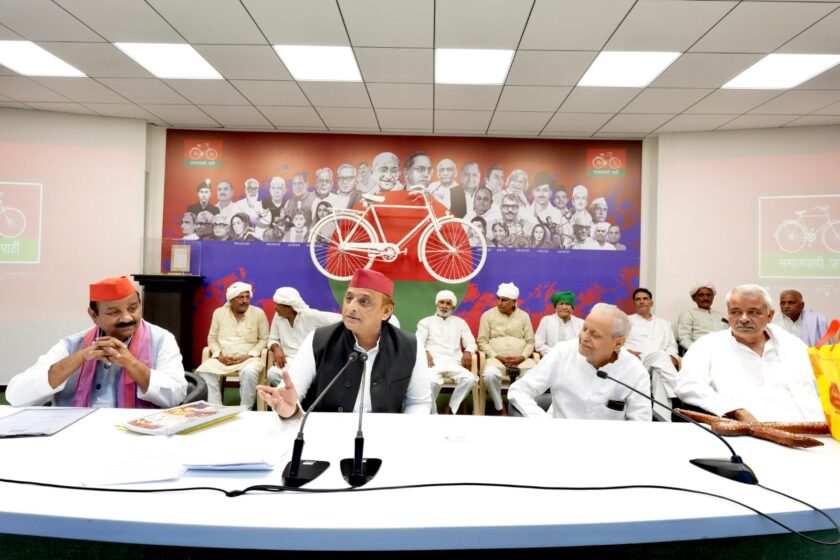
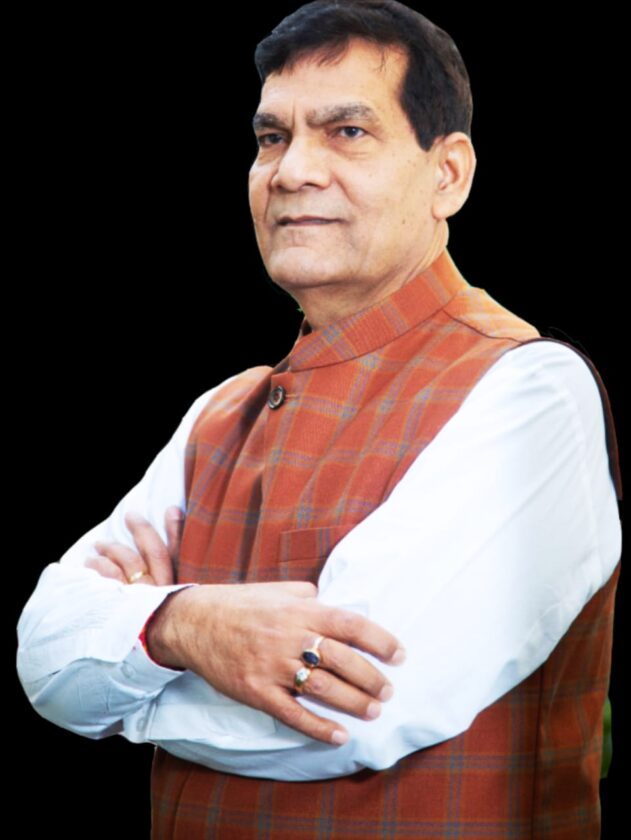
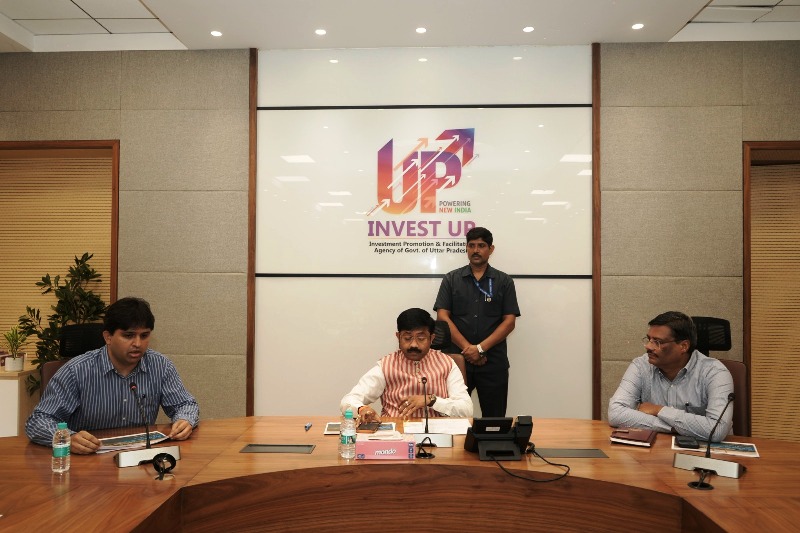
The proposed regulations were presented before Uttar Pradesh Industrial Development Minister Nand Gopal Gupta ‘Nandi’ during a high-level meeting held at PICUP Bhawan in Lucknow on Tuesday. Detailed discussions were held on various provisions of the draft, and several important suggestions were offered during the meeting.

Officials informed the minister that the Unified Model Building Regulations-2026, prepared for Noida, Greater Noida, Yamuna Expressway Industrial Development Authority (YEIDA), Gorakhpur Industrial Development Authority (GIDA), UPSIDA and UPEIDA, will promote private investment in sectors including manufacturing, tourism, IT, IT-enabled services, logistics, healthcare, education and other emerging industries.
The proposed regulations will soon be placed before the Uttar Pradesh Council of Ministers, and after approval, the new building bylaws will be implemented across industrial development authorities.
Minister Nandi said that under the leadership of Chief Minister Yogi Adityanath, the Uttar Pradesh government has continuously introduced policy reforms to accelerate industrial development and investment. He described the Unified Model Building Regulations-2026 as a significant reform that aims to encourage development rather than restrict it.
He directed officials to resolve any discrepancies or challenges related to the implementation of the new regulations at the government level.
“The state government’s objective is to provide better facilities to investors, entrepreneurs and citizens while establishing Uttar Pradesh as a leading industrial and economic hub of the country. The Model Building Regulations-2026 will provide a new direction to investment, employment generation and infrastructure development,” Nandi said.
He added that the new regulations would play an important role in establishing Uttar Pradesh as a modern, investor-friendly and sustainable development-oriented state. The framework aims to ensure optimum utilisation of land, simplify construction procedures and create a favourable environment for investors.
According to officials, the new regulations will bring uniformity in building norms across all industrial development authorities while making approval processes simpler, transparent and efficient.
Focus on Land Utilisation and Vertical Development
The Model Building Regulations-2026 include several provisions to promote better land utilisation and vertical development. Floor area ratio (FAR), ground coverage, setback and parking norms have been rationalised.
The permissible FAR has been increased in various categories, with additional incentives based on road width. For roads wider than 45 metres, there will be no maximum limit on FAR, enabling greater economic activity on limited land while encouraging compact urban development and preventing uncontrolled expansion.
Simplified Approval Process
The new regulations aim to make building approval procedures easier and faster. Key provisions include registration and self-certification facilities for residential plots up to 100 square metres and commercial plots up to 30 square metres with a nominal fee of ₹1.
The regulations also provide for deemed approval based on maps prepared by technical experts within prescribed limits. A deemed No Objection Certificate (NOC) approval system has also been proposed.

The new rules will also cover compounding, addition and alteration of existing buildings.
Special Provisions for Industries and Data Centres
Special provisions have been included for industrial development, covering flatted factories, MSME units, non-MSME industries, warehousing and logistics units, and data centres.
Industrial plots spread over four acres or more will have provisions for workers’ dormitories. Additional FAR benefits and relaxed parking norms have been proposed for data centres. Stilt and podium parking facilities will also be permitted in industrial areas.
Boost to Housing and Commercial Development
Rules for group housing, plotted development and multi-unit housing have been simplified. The minimum plot size for group housing has been fixed at 2,000 square metres, while plots up to 300 square metres will be eligible under the multi-unit category.
Podium parking will be permitted on group housing plots exceeding 1,500 square metres. Affordable housing provisions under Pradhan Mantri Awas Yojana-2.0 have also been incorporated.
To promote commercial activities, commercial buildings will be allowed on roads with a width of 12 metres or more. The minimum plot size requirement for hotels with up to 20 rooms has been removed, while larger hotels will require a minimum plot size of 500 square metres.
Special provisions have also been introduced for IT/ITES companies, offices and service apartments.
Healthcare and Education Sector Reforms
The regulations have introduced practical norms for healthcare and education infrastructure. Separate standards have been prepared for diagnostic centres, clinics, pathology laboratories, nursing homes and hospitals, including provisions for ambulance parking.
For educational institutions, plot size requirements from nursery schools to universities have been rationalised. Facilities for school bus parking and pick-up and drop-off zones have also been included.
Emphasis on Mixed-Use Development
The new framework gives special importance to mixed-use development and transit-oriented development. Mixed-use projects will be permitted along roads with a width of 30 metres or more.
Officials said this will promote balanced development of residential areas, commercial activities and public services, helping create modern urban centres.
The meeting was attended by Additional Chief Secretary, Infrastructure and Industrial Development Department, Alok Kumar, Chief Executive Officer of Invest UP Vijay Kiran Anand, and other senior officials.







 ---------------------------------------------------------------------------------------------------